The World Inside
A novel of overpopulation and total sexual license in urban towers.
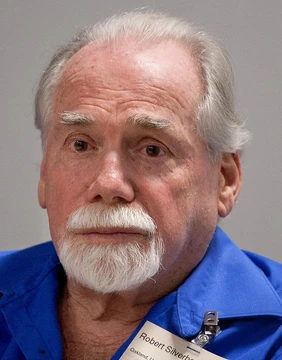
Robert Silverberg’s 1971 novel *The World Inside* began as a series of shorter pieces published in 1970 and 1971, mostly in *Galaxy* magazine. One of these, the novella “The World Outside,” was a Hugo nominee. The book itself earned a Hugo nomination in 1972, but Silverberg turned it down. Orb Books released a trade paperback edition on March 2, 2010.
The story takes place on Earth in the year 2381, when the population has hit 75 billion. A quasi-religious belief that reproduction is the highest good has driven this growth. Most of the action unfolds inside Urban Monad 116, a three-kilometer-high tower.
War, starvation, crime, and birth control have all been eliminated. People live in vast skyscrapers called Urbmons, arranged so that no building casts a shadow on another. Each Urbmon has 25 self-contained “cities” of 40 floors, ranked by status, with administrators at the top. A single tower holds about 800,000 people. Excess population—three billion per year—is moved to new Urbmons under constant construction. All habitable land not occupied by towers is used for agriculture, with a theoretical population limit of 200 billion. Farmers live under strict birth control and trade food for technology; the two societies rarely meet, and their languages are mutually unintelligible.
Inside the Urbmons, total sexual license is the norm. Men are expected to “nightwalk,” and refusing a sexual invitation is rude. Having children is a blessing; most marry at 12 and become parents at 14. Even thinking about limiting family size is a faux pas. Privacy is nonexistent, and any desire to go outside or travel is considered perverse. Sharing extends to spouses and all resources, seen as necessary for peaceful coexistence in tight quarters.
Despite efforts to maintain stability, the lifestyle drives a small percentage of people insane, including two main characters. “Moral engineers” reprogram those approaching unacceptable behavior. Law enforcement uses zero tolerance: no trials, swift punishment. Anyone threatening the society—a “flippo”—is “erased” by being thrown into a shaft leading to the building’s power generator. This leads one character to suspect humanity has been selectively bred for life in the Urbmons.
Key characters include Aurea Holston, who resists reassignment; Siegmund Kluver, an urban administration theorist and consultant; Micael Statler, a computer en
- author
- Robert Silverberg
- published
- 1971
- nationality
- American
- genre
- Science fiction
- nomination
- Hugo Award (1972, declined)
- setting
- Earth, year 2381
- population
- 75 billion
Lore & Background
The novel is set on Earth in the year 2381, when the population has reached 75 billion due to a quasi-religious belief in human reproduction as the highest good. Most action occurs in a massive three-kilometer-high city tower called Urban Monad 116. War, starvation, crime and birth control have been eliminated; life is sustained within Urban Monads (Urbmons), mammoth thousand-floor skyscrapers arranged in constellations where shadows do not fall on one another. Each Urbmon is divided into 25 self-contained cities of 40 floors each, in ascending order of status, with administrators at the highest level. Each building holds approximately 800,000 people, with excess population of three billion a year transferred to new Urbmons under construction.
Reader's Guide
The World Inside is significant as a dystopian exploration of extreme overpopulation and social control, reflecting anxieties of the early 1970s about population growth and resource scarcity. Its nomination for a Hugo Award, though declined by Silverberg, underscores its impact within science fiction. The novel's depiction of total sexual license, enforced reproduction, and zero-tolerance justice offers a stark critique of societal pressures in densely packed environments. The work remains a reference point for discussions of Malthusian themes and the psychological costs of utopian engineering. Its legacy includes comparisons to other works like Judge Dredd and Stand on Zanzibar, and it continues to be studied for its portrayal of a world where individual freedom is sacrificed for collective stability.
Did You Know?
- The novel originally appeared as a series of shorter works in 1970 and 1971, all but one published in Galaxy.
- Silverberg declined the Hugo Award nomination for The World Inside in 1972.
- The population of Earth in the novel is 75 billion, supported by Urbmons that each hold approximately 800,000 people.
- Farmers in the novel live with strict birth control and their language is mutually unintelligible with Urbmon dwellers.
More in Novels by Robert Silverberg 1-24
Spotted an error? Know more?
This is a living reference — every entry is fact-audited, and reader corrections feed straight into our audit queue. Suggest an edit · See this site's audit record