Nightfall (Asimov novelette and novel)
A 1941 Asimov story about a planet facing its first night.
"Nightfall" is a science fiction short story by Isaac Asimov, first published in 1941. It depicts a planet where sunlight is constant, and darkness is unknown. In 1990, Asimov co-wrote a novel-length expansion with Robert Silverberg. The story has been widely anthologized, appearing in six collections of Asimov's work. In 1968, the Science Fiction Writers of America named it the best science fiction short story written before the Nebula Awards were created in 1965, and included it in *The Science Fiction Hall of Fame, Volume One*.
Asimov wrote the story between March 17 and April 9, 1941, selling it on April 24. It was his 32nd story, written while he was a graduate student in chemistry at Columbia University. Editor John W. Campbell asked Asimov to write it after discussing a quote from Ralph Waldo Emerson: "If the stars should appear one night in a thousand years, how would men believe and adore..." Campbell disagreed with Emerson's sentiment, arguing that people would go mad. He and Asimov chose the title together. Campbell bought the story at a bonus rate of 1.25 cents per word—above the standard one cent—and at over 13,000 words, it was Asimov's longest story to date. He received $166 (about $3,600 in 2025), more than double any previous payment. Asimov later said that before "Nightfall," neither he nor anyone else considered him more than a "third rater." The story appeared on the cover of *Astounding* for the first time and made him a top writer in the field. Asimov believed its unusual plot set it apart, though "The Last Question" remained his personal favorite.
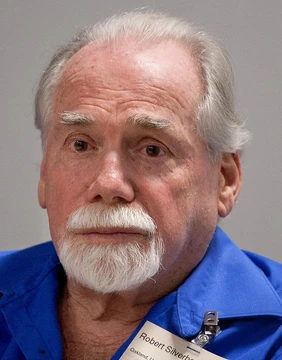
In 1988, Martin H. Greenberg suggested Asimov find someone to expand the 47-year-old story by adding a detailed beginning and ending while keeping the original intact. This led to the 1990 novel *Nightfall* by Asimov and Robert Silverberg. Asimov wrote in his autobiography that Silverberg did a wonderful job, remaining faithful to the original, and that he had very little to argue with.
The planet Lagash (called "Kalgash" in the novel) is always lit by six suns in its multiple-star system. Darkness exists only in enclosed spaces like caves or windowless rooms, but night never falls because at least one sun is always in the sky. A skeptical journalist visits a university observatory to interview scientists who warn that civilization will soon end. They have found evidence of many ancient ci
- Author
- Isaac Asimov
- Original publication
- September 1941 issue of Astounding Science Fiction
- Genre
- Science fiction short story
- Word count
- Over 13,000 words
- Payment
- US$166 (equivalent to $3,600 in 2025)
- Adaptation
- Novel with Robert Silverberg (1990)
Lore & Background
Written from March 17 to April 9, 1941 and sold on April 24, the short story was published in the September 1941 issue of Astounding Science Fiction under editor John W. Campbell. It was the 32nd story by Asimov, written while he was a graduate student in chemistry at Columbia University. Campbell asked Asimov to write the story after discussing a quotation from Ralph Waldo Emerson: "If the stars should appear one night in a thousand years, how would men believe and adore..." Campbell's opinion was contrary: "I think men would go mad." They chose the title together.
The story was bought at a bonus rate of 1+1⁄4 cents per word, and at more than 13,000 words it was Asimov's longest story yet. Asimov received US$166, more than twice any previous payment for a story. He later said that before "Nightfall" neither he nor anyone else other than perhaps Campbell considered him more than a "third rater"; his name appeared on the cover of Astounding for the first time, and the story made him one of the field's top writers. Asimov believed the unusual plot distinguished it, but "The Last Question" was his own favorite story.
In 1988, Martin H. Greenberg suggested Asimov find someone to expand the 47-year-old short story into a novel while keeping the story essentially as written. This resulted in the 1990 publication of the novel Nightfall by Isaac Asimov and Robert Silverberg. Asimov related that Silverberg "did a wonderful job and I could almost believe I had written the whole thing myself. He remained absolutely faithful to the original story."
Reader's Guide
"Nightfall" is significant for its exploration of psychological and societal collapse under an unprecedented natural event—a total eclipse on a planet with perpetual daylight. The story's premise, inspired by a Ralph Waldo Emerson quotation and John W. Campbell's counter-opinion, became a classic example of science fiction's ability to examine human nature through speculative scenarios. Its 1968 recognition by the Science Fiction Writers of America as the best science fiction short story written before the Nebula Awards cemented its legacy, and it was included in The Science Fiction Hall of Fame, Volume One, 1929–1964.
The story's influence extended beyond its original publication: it was adapted for radio programs Dimension X and X Minus One in the 1950s, a 1976 vinyl record dramatization by Analog Records, and a 1988 low-budget movie. The 1990 novelization with Robert Silverberg expanded the narrative while preserving the original plot. The story also inspired Dean McLaughlin's 1981 novel Dawn, a re-imagining of Nightfall. Asimov's own assessment that the story made him a top writer underscores its role in elevating his career and the genre.
Did You Know?
- The story was written while Asimov was a graduate student in chemistry at Columbia University.
- It was Asimov's 32nd story and his longest at over 13,000 words.
- The Science Fiction Writers of America voted it the best science fiction short story written before the 1965 establishment of the Nebula Awards.
- The 1990 novel adaptation was written by Robert Silverberg and kept the original story essentially as written.
More in Novels by Robert Silverberg 1-24
Spotted an error? Know more?
This is a living reference — every entry is fact-audited, and reader corrections feed straight into our audit queue. Suggest an edit · See this site's audit record